

Australians are fortunate enough to enjoy some of the best healthcare services in the world. No matter what type of healthcare you need or what demographic you come under, there will be a range of healthcare services and assistance programs to provide all the medical and healthcare you require.
Veterans home care is one such service, so let’s take a closer look at veteran health care, what it is exactly and how the veteran home care program can be of enormous assistance.
Table of Contents:
What Is the Department of Veterans Affairs?
Also known as DVA, the Department of Veterans Affairs was first established in 1976, with Sir Richard Kingsland being the first secretary.
The aim of DVA is to provide much-needed assistance to war veterans, their families and war widows in a number of different areas. This also includes a range of healthcare and home services.
What Is Veterans Home Care?
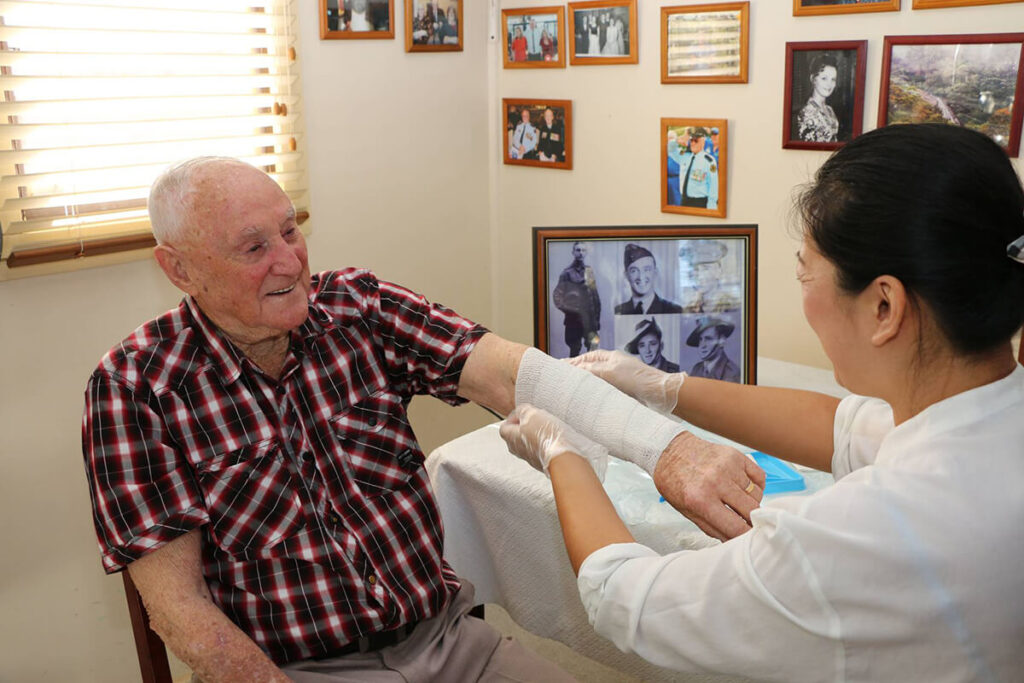
With veterans home care, veterans can take advantage of the Community Nursing Program and person-centred care, funded by the Department of Veterans Affairs. The program is aimed at providing community nursing services to entitled persons to meet their clinical and personal care needs.
This means at it’s core the goal is to enhance the independence, quality of life and health outcomes of veterans and their widows by avoiding early admission to hospital and/or residential care through access to high-quality community nursing services.
Any assistance received will be personalised and tailored to suit the specific needs and requirements of the individual. Person-centred care treats patients as individuals and equals in the healthcare and healing processes, rather than seeing clients as victims of disease or passive recipients of healthcare services.
Eligibility for Veterans Home Care
To be eligible for assistance, the individual must be considered as an “entitled person” by the DVA who makes the decision. An entitled person needs to be the holder of a current DVA Gold Card. However, recipients of the DVA White Card may also qualify for assistance under the scheme. You can verify eligibility by contacting the DVA directly or by talking to your home care service provider.
What Are the Benefits and Services Of Veterans Home Care?
It’s important that veterans and their families are aware that professional help and assistance is available.
Quality of life and independence are two of the primary goals of veterans home care and the Community Nursing Program. Veterans home care allows the client to remain in the familiar surroundings and comfort of their own home while receiving the regular assistance and treatment they need.
This is always a great alternative in order to remain closer to loved ones, friends and their beloved pets, which results in a more fulfilling and contented lifestyle.
Essential Services Provided For Veterans
Let’s now look at some of the essential services that in-home care provides for veterans:
- Skincare management services
- Chronic disease management
- Management of symptoms
- Help with personal hygiene
- Medication administration
- Incontinence management
- Wound and injury care
- Essential pain management
- The prevention of falls
- In-home palliative care
- Pressure area care
- Help with feeding
- PEG and Nasogastric tube feeds
- Diabetes management and care
- And more…
These are just some of the services clients can expect to receive. Veterans home care services also provide assistance in other areas, such as the arranging of carer support services, as well as assistance with getting referrals to healthcare professionals and specialists.
How To Get Veterans Home Care For Your Loved One
In order to receive in-home care from an eligible veterans home care services team, you must first receive a referral from a medical professional. Once you are put in touch with a home care service, they’ll be able to advise you on the best treatment and assistance plan to suit your requirements or the requirements of your loved one.
Vital Home Health Services is one such provider of quality in-home healthcare and assistance services for veterans and war widows. We provide person-centred care that’s tailored to the individual needs of the client for the very best outcome.
If you need some guidance please feel free to get in touch with our friendly team for further information on our services, your eligibility for veterans home care or any other inquiries you may have.
Reference:
Coulter, A. and Oldham, J. (2016) “Person-centred care: What is it and how do we get there?,” Future Hospital Journal, 3(2), pp. 114–116.